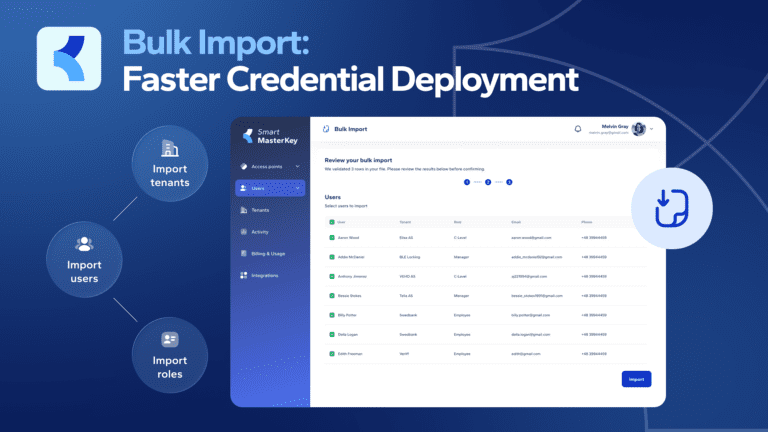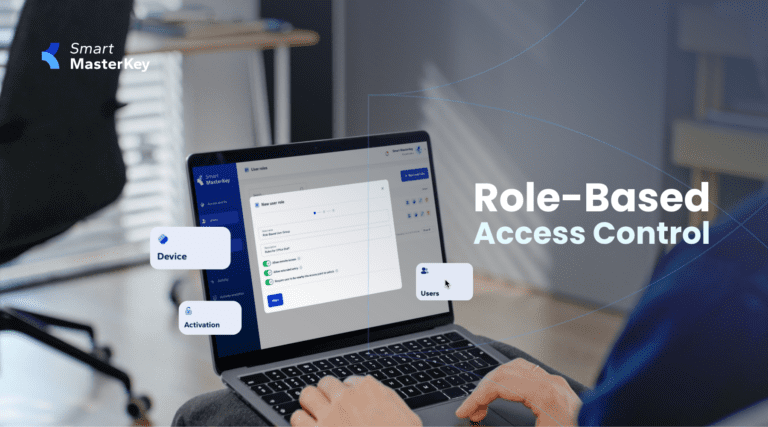
In the traditional commercial real estate landscape, tenants often lack a direct method to manage their own employee accesses, forcing them to rely entirely on the property owner for every administrative change. This creates a significant workload for landlord administrators and results in frustrating waiting times for tenants when issuing new mobile credentials or revoking access for departing staff. To address these inefficiencies, the Smart MasterKey ecosystem has released the Tenants system, which extends our Role-Based Access Control foundation to support multi-organisation access delegation.
It allows building managers to delegate door management to their customers (the tenants)
while maintaining sovereign ownership and full hardware control. By bridging the gap between absolute ownership and operational flexibility, building managers can now empower tenants to manage their own employees and mobile credentials without compromising the security or visibility of the underlying infrastructure.
Seamless Invitation and Onboarding Workflow
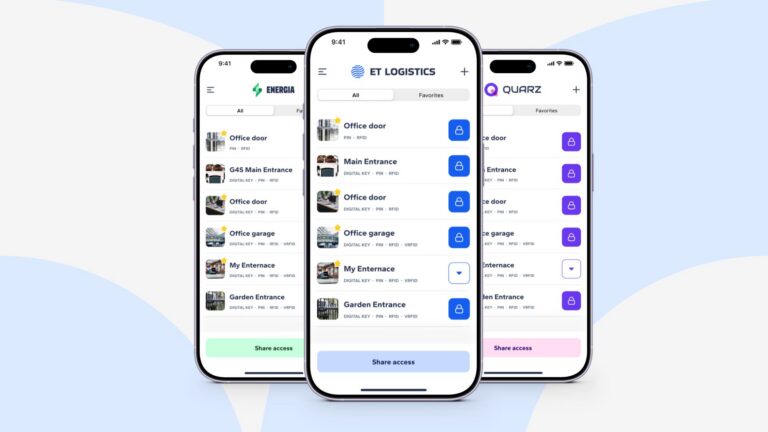
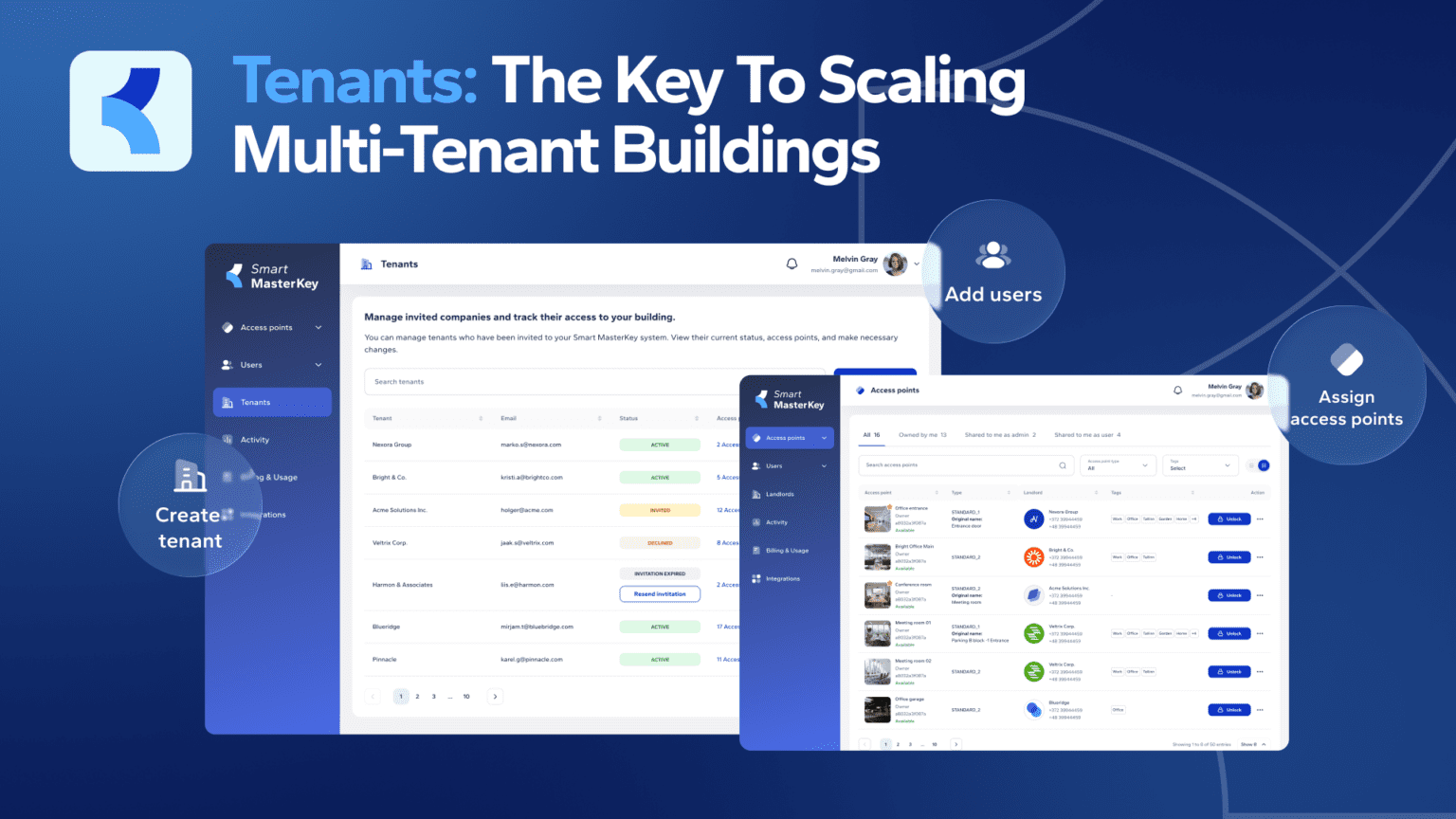
The Tenant system extends the role-based access control foundation in Smart MasterKey to support multi-organisation delegation. A Landlord can now create Tenant organisations inside the same platform, assign each Tenant a defined set of doors, and let them manage access to those doors on their own. The Landlord keeps ownership of the hardware, the master configuration and the access logs. The Tenant gets a self-service interface for the things they were going to handle anyway: issuing mobile credentials to their staff, revoking access when someone leaves, and creating roles for visitors or contractors with the right scope.
Nothing crosses the boundary unless the Landlord allows it. A Tenant cannot see other Tenants. A Tenant cannot edit doors that belong to the building. A Tenant cannot transfer door ownership, replace doors, or change hardware settings. A Tenant cannot promote themselves. What a Tenant can do is run their own access lifecycle inside the box the Landlord drew for them.
What changes for each side
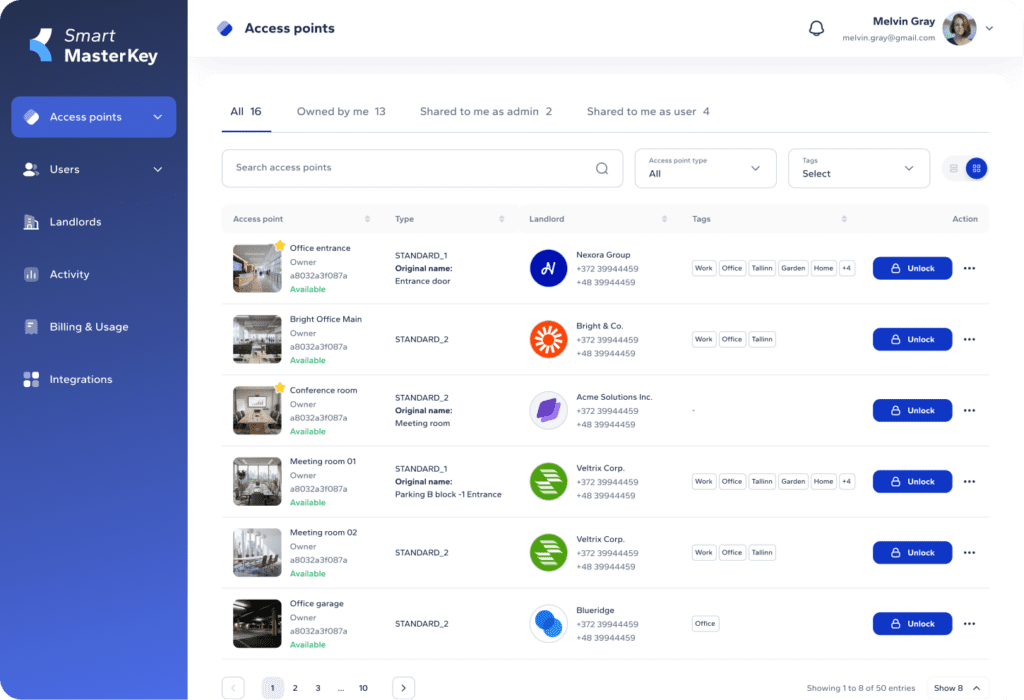
For the Landlord, the daily admin load drops close to zero. The work that used to land in a shared inbox, things like “new starter, please add” or “we lost a card, please disable”, routes to the Tenant who actually owns the answer. The Landlord still owns the access logs across all doors and still controls which doors each Tenant can see and manage. The mental model shifts from “we run access for this building” to “we run the rules; the Tenants run themselves.”
For the Tenant, the friction goes away. There is no ticket to file, no email to chase, no waiting on the building’s office hours. New staff get a mobile credential on their first morning. Offboarding happens in the moment a Tenant admin clicks revoke, not after a round trip through the building’s office. Visiting contractors get scoped, time-limited access that does not need a follow-up.
Both sides end up with something neither had before. A single source of truth on who has access to what, with the operational work delegated to the party best placed to do it.
Nothing crosses the boundary unless the Landlord allows it. A Tenant cannot see other Tenants. A Tenant cannot edit doors that belong to the building. A Tenant cannot transfer door ownership, replace doors, or change hardware settings. A Tenant cannot promote themselves. What a Tenant can do is run their own access lifecycle inside the box the Landlord drew for them.
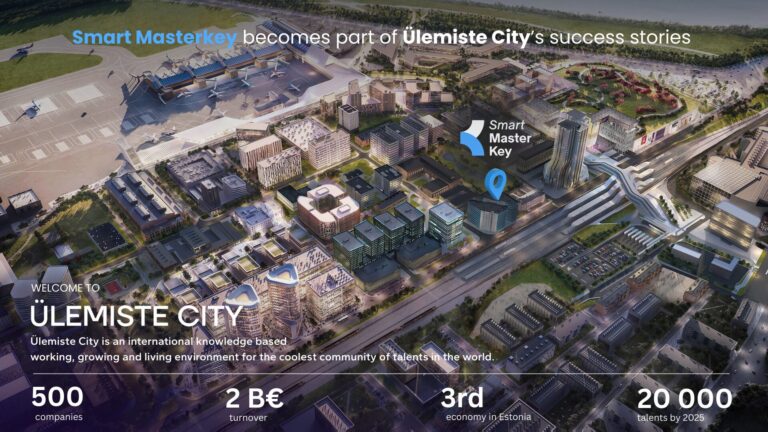
Use Case: Ülemiste City

Ülemiste City is a useful frame for this, because it is the kind of commercial site where the old problem was loudest. A campus environment with many organisations under one Landlord is the structural worst case for the legacy model. Every additional Tenant adds linear admin load on the Landlord and linear friction for the Tenant. The Tenant system flattens that curve. Each organisation on the campus can manage its own people and its own credentials inside its own scope. The Landlord keeps a unified view across the campus, sees every credential issued and every door used, and stops being the bottleneck for someone else’s HR moves.
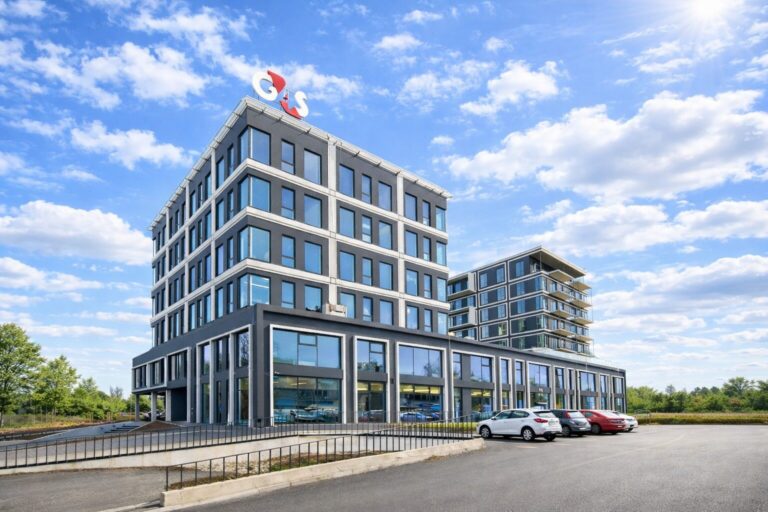
The same logic applies to any office park, business centre or mixed-use property with more than one Tenant.
If you operate a multi-tenant property, or a portfolio of them, and the workflow above sounds like yours then lets talk.